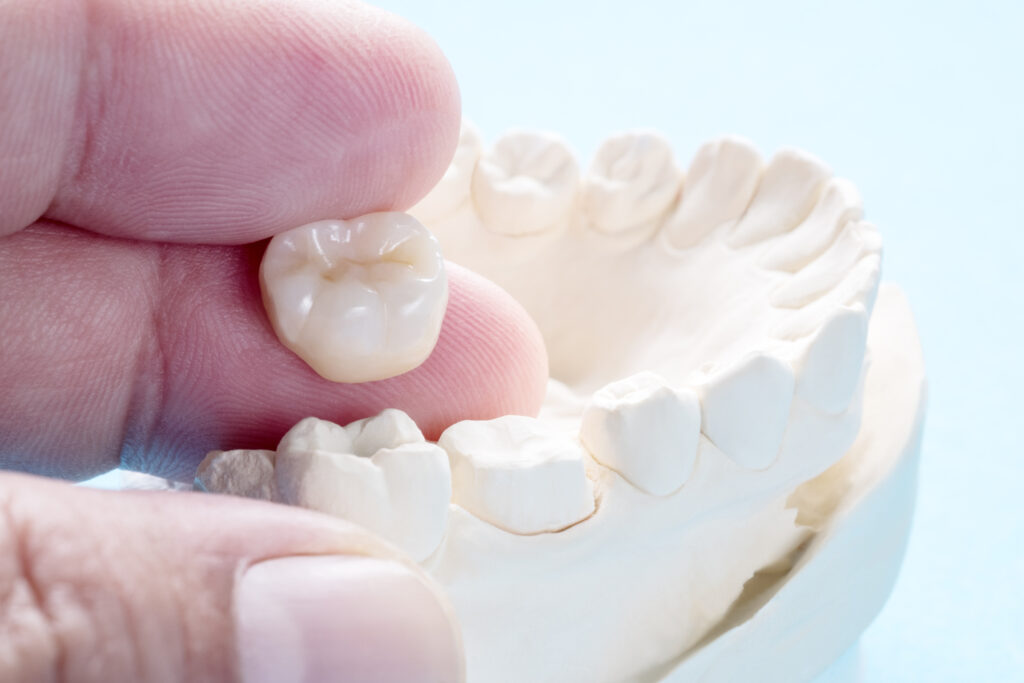
Dental crowns are restorative dentistry treatments designed to shield and reinforce damaged teeth. A tooth cap covers the visible portion of a tooth, establishing a new, durable surface.
Fusion Dental and Braces provides custom dental crowns to enhance oral health at our offices. Restorative dentistry solutions are ideal for broken, worn-down, or decayed teeth in Harker Heights and Killeen.
What Functions Do Dental Crowns Serve?
Dental crowns serve as highly effective tools for improving both the aesthetic appearance and function of teeth. Tooth caps accomplish several specific goals for patients:
-
Dental crowns reinforce teeth that have large fillings to prevent breakage under pressure.
-
Restorative dentistry uses crowns to protect fragile teeth after root canal therapy.
-
Prosthetic teeth (crowns) cover dental implants to mimic the look of natural teeth.
-
Dental crowns anchor dental bridges securely to replace multiple missing teeth.
-
Tooth caps conceal cracks, chips, or worn surfaces to improve smile aesthetics.
Which Materials Are Used for Dental Crowns?
Dental crowns are manufactured from various materials, each offering distinct benefits for the patient. Fixed prosthetic options include the following types:
-
Metal crowns utilize gold or silver alloys to provide exceptional durability for back teeth.
-
Porcelain crowns mimic natural teeth seamlessly, making them the top choice for visible smiles.
-
Ceramic crowns offer a natural look and are often used for same-day restorative treatments.
-
Zirconia crowns provide extreme strength and aesthetics, though they are a premium material option.
-
Restorative dentistry also utilizes inlays and onlays when a tooth requires less than full coverage.
What Is the Treatment Process for Dental Crowns?
Dental crowns require a precise procedure to ensure the health of teeth and gums. Restorative dentistry protocols involve treating infections before establishing a stable foundation.
Step 1: Preparing the Tooth
The dental crown process begins with numbing the area to prevent patient discomfort. Restorative dentistry experts shape the tooth by removing damaged enamel to ensure a secure fit.
Step 2: Placing the Temporary Crown
A temporary tooth cap protects the prepared tooth while the laboratory fabricates the permanent version. Dental crowns (temporary) require patients to avoid sticky foods to prevent dislodging.
Step 3: Bonding the Final Crown
The dental crown is checked for color, shape, and bite alignment during the final visit. Fixed prosthetic devices are then cemented permanently and polished for a natural finish.
Additional Dental Crown Information
Dental crowns require maintenance to ensure they last between 5 to 15 years. Oral health habits, such as brushing and flossing twice daily, are critical for longevity.
Tooth caps can still develop cavities at the gum line if plaque accumulates. Dental crowns do not protect the underlying tooth from decay if hygiene is neglected.
Restorative dentistry procedures like crowns are generally not painful due to numbing agents. Dental crowns may cause mild sensitivity initially, which subsides within a few days.
Dental insurance typically categorizes these as major procedures, covering about 50% of the cost. Dental crowns may be substituted with veneers or bonding if the damage is minor.
Fusion Dental and Braces is ready to restore your smile with dental crowns today. Restorative dentistry appointments are available in Harker Heights, Killeen, Waco, and Hewitt. Learn more about your payment and insurance options.
Dental Crown FAQs
Does insurance typically cover dental crowns?
+
Dental insurance typically provides partial coverage for dental crowns, but the extent can vary between plans. Most insurance policies categorize crowns as a major procedure, often covering 50% of the cost after the patients meet their deductible. However, coverage may depend on factors such as the crown’s material, the tooth’s location, and whether the procedure is medically necessary. Please contact your insurance provider to understand your coverage and review your out-of-pocket expenses.
How long do dental crowns last?
+
Dental crowns typically last about 5 to 15 years, depending on various factors. The longevity of a crown is influenced by oral hygiene practices, bite habits, and the material used. Porcelain-fused-to-metal crowns often endure for about a decade, while all-ceramic crowns may last slightly longer. To maximize your crown’s lifespan, maintain excellent oral hygiene, avoid grinding your teeth, and schedule regular dental check-ups.
Will getting a dental crown hurt?
+
Getting a dental crown is generally not painful. We will use numbing medication during the procedure to ensure you are not uncomfortable or in pain. However, you may experience some sensitivity or mild soreness after the anesthesia wears off, especially if you’ve had a root canal. However, you can manage this discomfort with pain relievers. These symptoms will subside within a few days. Most patients find that the long-term benefits of a restored, functional tooth outweigh any temporary discomfort. Your Fusion Dental dentist will prioritize your comfort throughout the process.
Can you get cavities under a dental crown?
+
Yes, it is possible to get cavities under a dental crown if bacteria get between the crown and the tooth. This can happen if the crown becomes loose or if there’s a gap around the edges. Plaque and food particles can build up in these areas, leading to decay. To prevent this, it’s important to maintain good oral hygiene, including brushing, flossing, and seeing your dentist regularly for checkups. If decay is found under a crown, it may need to be replaced to treat the cavity and protect the tooth.
Are there any alternatives to dental crowns?
+
While a dental crown is a standard restorative option, a few alternatives exist for those seeking different solutions. Dental inlays and onlays offer more conservative treatment, preserving more of the natural tooth structure. For less extensive damage, dental bonding can effectively repair chips or small cavities. Dental veneers provide an aesthetic solution for visible teeth when the tooth’s root is still healthy. After a dental exam, your dentist will recommend the best option.
Can I still get a dental crown if I don’t have much tooth structure left?
+
Receiving a dental crown with limited tooth structure is often possible; however, it depends on the specific condition of your tooth. Your dentist may need various techniques, such as dental bonding, to build up the remaining structure. Building up the tooth will help create a stable foundation for the crown. In some cases, patients need a root canal before crown placement. However, if there’s insufficient tooth structure, we can use dental implants to replace the tooth after extraction. Your dentist will assess your tooth and suggest the best treatment plan for your unique case.